Beyond the Threshold: What Families Can Expect in the First Month of Cottage Nursing Care
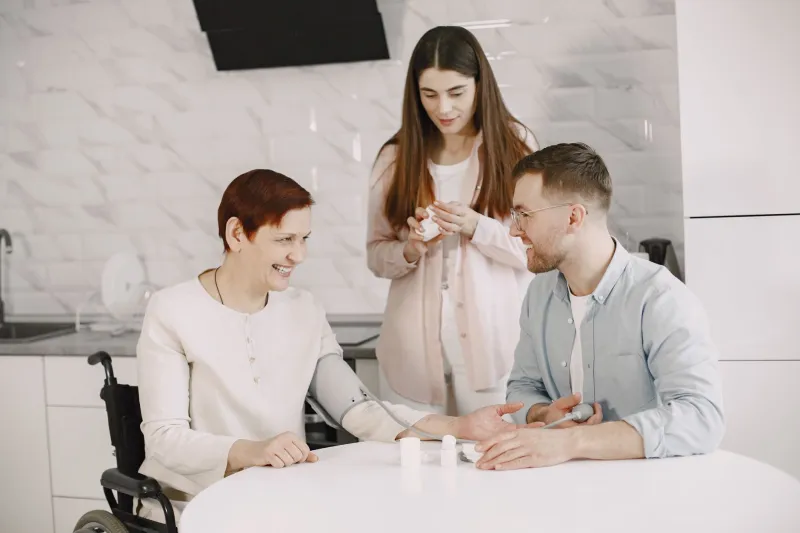
Moving into a nursing cottage is rarely a single moment. It is a sequence of small adjustments: a different breakfast table, an unfamiliar night-time routine, a new set of faces at the door. For families, the first month can feel equally unsettled. There may be relief that professional help is in place, mixed with guilt, exhaustion and the urge to hover. A calm understanding of what typically happens during those early weeks can make the transition kinder for everyone.
The First Few Days: Observation Before Assumption
In the first 24 to 72 hours, a good nursing team will observe more than it intervenes. Nurses and carers need a baseline: how the resident slept, what they ate and drank, how they mobilised, whether pain was controlled, how they communicated and what worried them. This is not surveillance. It is the beginning of a care plan built around a person rather than a diagnosis.
Families can help by sharing ordinary details that do not always appear in referral paperwork. What name does your relative prefer? Do they like a light on at night? Are they used to a hot drink before bed? Which sounds, smells or routines feel reassuring? A small cottage setting often has the advantage of being able to act on such details quickly, because fewer residents mean fewer competing demands on attention.
It is also reasonable to keep early visits short and predictable. A relative who is exhausted, tearful or withdrawn after a move is not necessarily unhappy with the care. They may simply be managing change. Families should feel able to ask the nurse in charge what has been observed, rather than relying on a single visit to judge the whole experience.
Week One: The Shape of a Day
By the end of the first week, routines begin to take shape. Mealtimes, personal care, medication rounds, rest and activity start to form a rhythm. Some residents settle into this quickly. Others take longer, and some may seem more capable on one day than the next. Fluctuation is common, particularly where memory loss, frailty or infection risk is present.
This is the week when small signals matter. A cottage team may notice that a resident consistently leaves half of their breakfast, or that they become quieter in the afternoon, or that they are reluctant to join a group but happy to sit near the garden door. Such observations are not trivia. They inform hydration, nutrition, pain relief, mobility and emotional support.
Families can support settling in without overwhelming their relative. Bring a few familiar items rather than an entire room's worth of possessions. Keep visiting times consistent. Nominate one family member as the main point of contact for the care team so that messages do not become fragmented. Ask specific questions: 'How did lunch go today?' is more useful than 'Is she all right?' The latter invites a reassurance that may be too broad to be meaningful.
Week Two: Small Signals and Honest Conversations
By the second week, the team should have a clearer picture of mood, appetite, sleep and confidence. Confidence is often overlooked. A resident may be physically well cared for but still hesitant about asking for help, joining a meal or walking to the lounge. In a larger setting, that hesitation can go unnoticed. In a cottage-style home, it is harder to miss.
Families should expect an early review conversation. This is the point to discuss what has changed and what still needs attention. It is reasonable to ask about falls, pressure care, continence, pain, medication and night-time settling. It is equally reasonable to say what you have observed. A good care team will not treat family knowledge as interference. They will treat it as part of the picture.
Honest conversation also means avoiding the pressure to declare that everything is wonderful. Settling in is not a performance. If your relative is tearful, angry or withdrawn, say so. The team can then consider whether the cause is grief, pain, constipation, infection, medication, boredom or simply the strangeness of a new place.
Week Three: Finding a Rhythm
The third week is often when the first genuine signs of familiarity appear. A resident may greet a carer by name, choose a seat at the table, or comment on the garden. They may still prefer their own room for much of the day, and that is a legitimate choice. Settling in does not mean becoming extroverted. It means feeling safe enough to exercise preference.
Family visits can become less about checking and more about sharing ordinary time. Bring a favourite photograph, a piece of music, a newspaper or a small task such as writing Christmas cards. Avoid turning every visit into a review meeting. The most reassuring moments are often unremarkable: a shared cup of tea, a short walk to the window, a laugh at something trivial.
Where a relative is living with dementia, familiar objects and consistent phrasing can help. Short sentences, a calm pace and a named carer are often more useful than lengthy explanations. Families should not feel responsible for orientating their relative to every detail. The care team should be doing that gently, repeatedly and without making the person feel foolish.
Week Four: Review and Reassurance
By the end of the first month, a formal review should take place. What has changed since admission? Are there new care needs? Is the current plan helping? Does the family understand what is being monitored and why? This is also the moment to ask whether the setting is right. A cottage may be warm and small, but it must still be able to meet nursing needs safely.
Not every resident will be settled within 30 days. Some need longer to grieve for the home they left. Others may have a period of improvement followed by a dip. The first month is a guide, not a deadline. What matters is that observations are being made, concerns are being raised and the family feels like a partner rather than a spectator.
Supporting Without Overwhelming
Consistency is more helpful than intensity. Visit at similar times, keep calls brief, and allow the care team to do the personal care without an audience. Bring comfortable clothing and familiar toiletries. Respect the resident's privacy and their right to say no to a visit or an activity. If you are worried, ask for a named nurse and a clear time to talk.
The first month after the front door closes is not a disappearance. It is a handover of care, with family love still very much part of the picture. In a small cottage setting, the hope is that the small signals are seen early, the awkward conversations happen sooner, and the resident is allowed to settle at their own pace.