Small Visitors, Real Belonging: A Family Guide to Intergenerational Visits in Nursing Care
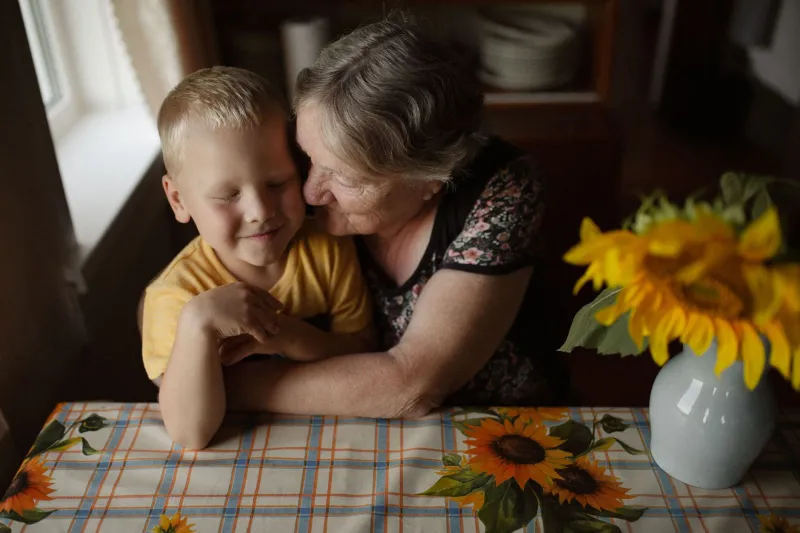
There is a particular sound a nursing cottage makes when a child arrives: a door pushed a little too briskly, a bag of colouring pens upended on a table, a name called out across the lounge before an adult can shush it. Families sometimes apologise for it. They need not. A well-run home absorbs that sound gladly, because it carries something no activity programme can manufacture — the ordinary continuation of family life.
Yet intergenerational visiting does not organise itself. It asks for a little forethought from the adults, a willingness to ask the home's advice, and a clear-eyed understanding of what a child is and is not there to do. What follows is a practical outline for families in the United Kingdom considering such visits.
Why children belong in the room
Grandchildren and great-grandchildren offer a resident something increasingly rare in institutional life: a relationship unburdened by the history of care. A grandchild does not manage medication, negotiate with a GP or worry about a fall risk assessment. A grandchild simply arrives, sits on the arm of a chair and says something unexpected.
For the child, the benefit is quieter but no less real. Children who are included in later-life care tend to grow into adults who are not frightened of it. They learn that frailty is part of a life rather than a failure of one, and that a person in a nursing chair is still a person with preferences, jokes and a favourite biscuit.
For the resident, the presence of a young visitor often draws out a version of themselves that the care team may see only in glimpses — the grandmother who was funny, the great-uncle who could whistle, the woman who once ran a Sunday school class.
Preparing a child honestly
Children cope poorly with surprises and well with information. Before a first visit, explain in plain terms what the home is and why the relative lives there. Avoid euphemism; "Grandma has moved somewhere with nurses who help her all day" serves far better than "Grandma has gone to a better place".
Where a relative is living with dementia, describe what the child may notice — repetition, forgotten names, a walking aid, perhaps occasional agitation — and make clear that none of it is the child's fault or responsibility. It helps to give a child a small script: "Hello Nana, it's me, Poppy. I've brought my drawing." Repetition of names and connections is not awkwardness; it is courtesy.
It is equally fair to let a child know they may feel sad, bored or uncertain, and that any of those feelings is allowed. Arrange a code word in advance — something innocuous, such as "I'm thirsty" — that signals the child wants to step outside for a few minutes, without needing to explain why.
Reading the rhythm of the day
Homes run to a rhythm, and a good visit fits within it rather than across it. Telephone the cottage beforehand and ask when children are most welcome. Late morning and mid-afternoon generally work well: after personal care and breakfast have concluded, and well clear of the medication round, which deserves a calm and uninterrupted atmosphere.
Keep a first visit short. Forty minutes is ample; twenty is not a failure. It is far better for a child to leave wanting slightly more than to be led out in tears. Where a relative tires quickly, consider a brief visit in a quieter sitting room or the garden rather than the main lounge, and ask the staff which space they would recommend.
What to bring, and what to leave behind
Activities work best when they are shared rather than performed. A photograph album is close to ideal, because it invites the resident to speak rather than obliging them to listen. A simple craft, a jigsaw with generous pieces, a favourite biscuit, a school reading book, a hand of cards — all offer something to do with the hands while conversation finds its own level.
It is worth resisting the instinct to turn a child into an entertainer. A recital of piano pieces or a rehearsed news bulletin can leave everyone feeling examined. The most memorable moments in a cottage are usually unplanned: a child explaining a video game incomprehensibly to a resident who is politely fascinated, or two people silently sorting buttons.
Care homes will often have their own guidance on infection control and on what may be brought in, particularly where a resident is frail. A quick question costs nothing and prevents embarrassment.
When the questions come
Children ask direct questions, usually in the car park. "Why doesn't she remember me?" "Is she going to die?" "Why does that man shout?" Answer honestly, briefly and without alarm. "Her illness makes remembering hard, but she knows you are someone who loves her" is truthful and sufficient. If you do not know the answer, say so.
Should a resident say something confused or distressing, redirect gently rather than correcting. Children learn quickly from watching adults, and a calm deflection teaches them more about kindness than any lecture on the subject.
The teenage visitor
Adolescents often need a different offer. Rather than an afternoon of sitting, they may prefer a task: helping to set out tea, pushing a wheelchair along a corridor with a nurse's guidance, setting up a video call, or bringing in a playlist of music from the resident's youth. Purpose removes self-consciousness.
A partnership with the care team
Tell the home that children are coming. A nurse-led cottage will usually welcome the news and may suggest timing, a quieter room or a member of staff who is good with young visitors. Ask, too, whether a visit can be paused if the resident is having a difficult day — and be prepared to accept that answer without treating it as rejection.
Intergenerational contact is not a therapy to be prescribed or a performance to be judged. It is simply family life continuing in a new setting, with all the noise and awkwardness and occasional delight that family life involves. In a cottage of any size, that is not a disruption to care. It is part of what makes care humane.