Behind the Medicine Trolley: How Cottage Nursing Makes Medication Safe and Ordinary

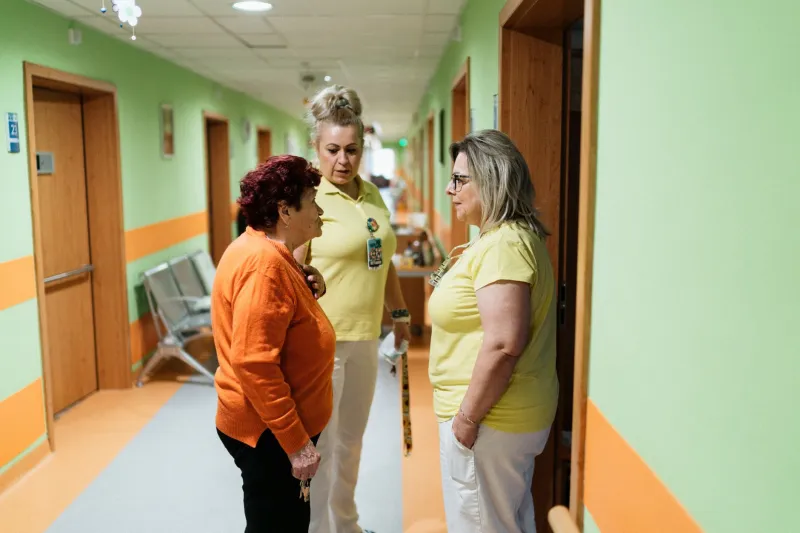
Photo: care home nurse medication trolley UK elderly resident, via extendedhomecare.org
As families consider nursing care in 2026, questions about medication often sit near the centre of the conversation. They are practical questions — who gives the tablets, how are they stored, what happens if someone refuses — but they are also emotional ones. A small cup of medicines can feel like a symbol of dependence. In a cottage-style nursing home, the task of managing it should feel less like a symbol and more like a reliable part of ordinary life.
This article explains the general shape of medication management in UK residential nursing care. It is not clinical advice and cannot replace guidance from a prescriber, pharmacist or the nursing team responsible for an individual resident.
A routine that carries weight
Medication is among the most tightly regulated parts of care home life. It is also one of the most repeated. In a cottage setting, the morning round may take place while breakfast is being cleared, while a resident is being helped to dress, or while a family member is sitting in the lounge. That ordinariness is deliberate. Good medication practice should not feel theatrical; it should feel dependable.
The cottage scale matters here. In a smaller home, the registered nurse is more likely to know that one resident prefers to take tablets with a particular drink, that another becomes anxious if the trolley arrives without warning, and that a third likes to ask what each medicine is for. Those details do not alter the prescription, but they shape how the routine is delivered. Dignity is often found in those small adjustments.
From prescription to delivery
In the UK, medicines in a care home usually begin with a prescriber — often a GP, a hospital team or a specialist clinician. The prescription is then supplied through a community pharmacy or another contracted supplier. The home receives the medicines, checks them against the prescription and stores them securely. Some medicines require particular storage conditions, and controlled drugs are subject to additional recording and checking arrangements.
A family may see only the cup at the bedside, but behind it sits a chain of checks: delivery notes, stock records, expiry dates, storage arrangements and arrangements for returning unwanted medicines. When a prescription changes, the home should have a clear process for updating its records and obtaining the new supply. In a cottage, that process is often coordinated by the nurse in charge working alongside the manager and the pharmacy.
The chart behind the cup
The central record in most care homes is the Medication Administration Record, usually called the MAR chart. It lists the medicines, doses and times, and it is used to record what has been given, what has been refused and what has been omitted. A signature or initials should tell the reader who administered the medicine and when. If a resident declines a medicine, that should be recorded too, along with any action taken and any communication with the prescriber or family where appropriate.
The MAR chart is not simply paperwork. It is a safety tool and a communication tool. It allows the nurse on duty to see what has happened, allows a colleague to check the record, and allows the home to audit its own practice. Controlled drugs are usually handled with a second check, reflecting the additional legal controls around them. These checks are not a comment on trust among colleagues; they are a recognition that medicines carry risk and that routine safeguards protect everyone.
Consent is more than a signature
Adults are presumed to have the capacity to make decisions about their own treatment unless there is reason to believe otherwise. In practice, consent to medication may be given verbally, through a known advance decision, or through a documented best-interests process where the person lacks capacity under the Mental Capacity Act 2005. Families may be involved in those discussions, but their role is not automatically to decide. It is to help the team understand the person's wishes, feelings and previous views.
Covert administration — giving medicine hidden in food or drink without the person's knowledge — is exceptional and should never be a casual workaround. It requires a proper assessment, legal consideration and clear recording. Families who are concerned about how consent is being handled should feel able to ask the nurse in charge to explain the process.
Reviews and changes
Medicines should not drift. GP reviews, pharmacist reviews and reviews following a hospital admission are part of keeping prescriptions under sensible scrutiny. When someone moves between hospital and home, medicines reconciliation helps ensure that old prescriptions are not accidentally continued and new ones are not missed. A cottage-scale team may notice subtle changes in appetite, sleep or behaviour, and those observations can be passed to the prescriber for review.
Families are not entitled to every detail of every clinical discussion, but they should expect significant changes to be communicated in a timely way where appropriate. A question such as 'Who reviews the medicines, and how often?' is reasonable. So is 'How will we be told if something important changes?'
Questions worth asking
Families often arrive at a viewing with broad questions about staffing and activities. It is equally reasonable to ask about medicines. Useful questions include:
- Who administers medicines, and what training and supervision do they receive?
- How are medicines stored, and how are controlled drugs checked?
- How are refusals, omissions and errors recorded and reviewed?
- How often are medicines reviewed by the GP or pharmacist?
- How does the home communicate changes to families?
- What happens if a resident lacks capacity to consent to treatment?
- How are medicines managed when someone goes into hospital or returns?
- Who should a family contact if they have a concern about medication?
These questions do not require a clinical qualification. They are questions about systems, communication and accountability.
When concerns arise
If a family is worried about a medication matter, the first step is usually to speak to the nurse in charge or the registered manager. Ask for the concern to be recorded and for an explanation of what will happen next. If the response is unsatisfactory, the home's formal complaints procedure should be available. In England, the Care Quality Commission can also be contacted about concerns, though it does not investigate individual complaints in the same way as a formal complaint process.
The quiet test
Good medication management rarely announces itself. It looks like a nurse arriving at roughly the same time each morning, a clean trolley, a checked chart and a resident who is greeted by name. It sounds like an explanation given without haste. It feels like a routine that has been thought about, not one that has simply become habit.
The little cup of pills will never be entirely neutral. It carries dependence, trust and the ordinary vulnerability of needing help. But in a well-run nursing cottage, it should also carry something quieter: the assurance that the systems around it are steady, the people delivering it are accountable, and the person receiving it remains the point of the process.