What Lies Beneath the Rating: Reading a CQC Report With Clear Eyes in 2026

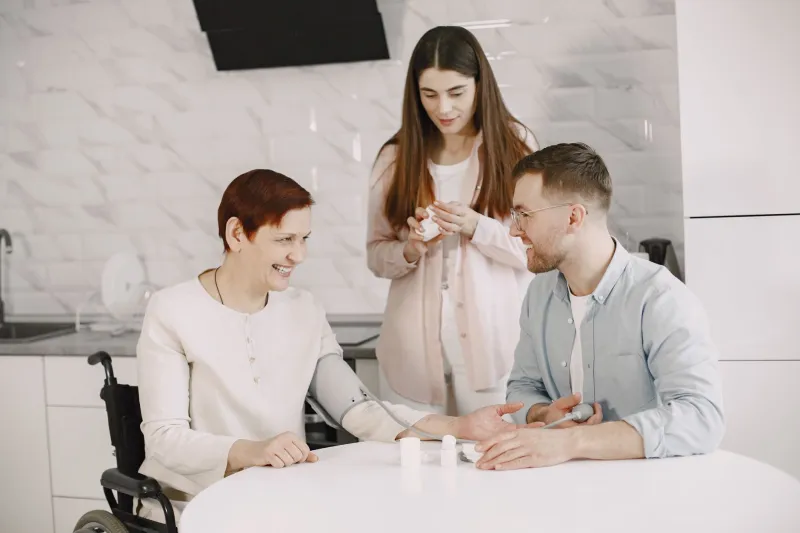
Photo: family reading care home inspection report UK CQC documents, via thumbs.dreamstime.com
For many families, the first encounter with a Care Quality Commission report feels like reading a school report about someone they love. A single word — “Outstanding”, “Good”, “Requires improvement” or “Inadequate” — appears at the top, and the heart either lifts or sinks. That reaction is understandable. A CQC rating matters, and it should not be dismissed. But a rating is a summary, not a full portrait. In a small, relationship-led nursing cottage, the report may capture less than a family needs to know, and it may also flag matters that deserve serious attention. The useful question is not simply “What rating did it get?” but “What did the inspectors see, what did they miss, and what has changed since?”
What a CQC report is, and is not
The Care Quality Commission regulates health and social care in England. Its inspections consider whether a service is safe, effective, caring, responsive and well-led. In recent years the CQC has used a single assessment framework, gathering evidence from people who use the service, staff, records, observation and partner organisations. Reports may include quality statements, scores and ratings for individual domains as well as an overall rating. They are a regulatory snapshot, not a guarantee. A report can be several months old by the time a family reads it, and a service can improve or deteriorate after inspection.
A CQC report is also not a substitute for a visit. It cannot tell you whether the atmosphere feels calm at teatime, whether staff knock before entering a bedroom, whether the manager knows every resident’s preferred name, or whether the cook notices that someone has stopped eating. Those things matter, and they are best judged in person.
The rating in context
“Requires improvement” is not a single, uniform category. It means the service was not meeting all expectations at the time of inspection. The report should tell you where, why and with what consequence. Sometimes it reflects a discrete problem — medication records not consistently completed, for example, or a leadership vacancy that has weakened oversight. Sometimes it reflects more than one domain and a pattern of concern. “Inadequate” is more serious and usually indicates significant failings, enforcement action or a real risk to people’s safety and dignity. “Good” is a positive judgement but not a promise of perfection; “Outstanding” is a high bar and should still be read alongside the detail.
Families should look for the difference between a rating that reflects paperwork and a rating that reflects lived experience. That distinction is not an excuse. Poor records can be a safety issue, and weak governance can allow other problems to grow. But a cottage may be warm, well staffed and deeply personal while still struggling with the administrative systems that inspections reward. Equally, a service can present well on paper while feeling rushed or impersonal to residents. The report is a starting point for questions, not a verdict on its own.
Lines worth slowing down for
Some phrases in a CQC report deserve closer attention than others. “Breach of regulation” is significant, especially when it identifies which regulation and what the provider must do. “Warning notice”, “conditions” and “urgent enforcement” indicate a higher level of concern. Look at whether the report describes risks that were actually experienced by residents, or risks that were identified but not yet realised. Both matter, but they are not the same.
It is also worth reading carefully around staffing, medicines, falls, infection prevention, nutrition and hydration, pressure care, end-of-life care, dignity and privacy, mental capacity, complaints and leadership stability. These are the practical areas where daily life is lived. A report may say that care was kind but that records were inconsistent, or that staffing was sufficient but that agency use had affected continuity. Those nuances matter more than a single adjective.
Ask whether the report includes an action plan or evidence of improvement. Check the date of the inspection and whether there have been subsequent inspections or updates. If the provider has published its own response, read it critically but fairly. A good response does not erase a concern, but it can show whether the service understood it.
The small-home question, answered fairly
Small, relationship-led homes can be misunderstood by inspection frameworks designed to compare large organisations. A cottage with one manager, a stable staff team and informal daily communication may not generate the same volume of paperwork as a larger home, even when the care is thoughtful. Inspectors rightly look for systems that protect people, but systems can become tick-box exercises that reward documentation over relationship. Families should feel entitled to ask how a small home demonstrates safety and quality without losing its human scale.
That said, smallness is not a virtue in itself. A small home can also have fewer staff to absorb sickness, less management cover, and practices that become informal in the wrong way. The fair position is this: a report should be read with an understanding of context, but context should never be used to excuse poor practice. The question is always what evidence exists that residents are safe, well cared for and listened to.
Questions to ask before and during a visit
A visit is the best chance to test the report against reality. Ask the manager what the inspection identified, what has changed since, and whether you can see the action plan. Ask how medicines are managed, how falls are reviewed, how complaints are handled and how residents’ views are gathered. Ask about staffing levels, especially at night and at weekends, and how agency staff are inducted. Ask how the home supports people at the end of life and how it respects cultural, religious or personal routines.
Then observe. Are call bells answered promptly? Do staff speak to residents rather than over them? Is there a choice at mealtimes? Are bedrooms private and personalised? Is there a smell that suggests poor cleaning or continence care? Do residents look comfortable and engaged, or simply supervised? Speak to relatives if you can, and ask what they wish they had known before choosing the home.
Other UK regulators
CQC reports apply in England. In Scotland, the Care Inspectorate publishes inspection reports; in Wales, Care Inspectorate Wales; and in Northern Ireland, the Regulation and Quality Improvement Authority. The language and ratings differ, so families should check the relevant regulator for the nation in which the home is located.
Reading with clear eyes
The most helpful approach is neither blind reassurance nor permanent alarm. Read the whole report, note the date, identify the specific concerns and ask what has been done. Visit more than once if possible, at different times of day. A CQC rating is a useful signal, but it is not the whole story of a nursing cottage. Families deserve both the confidence that regulation can provide and the discernment to see the care behind the badge.