More Than a Trim: How Regular Appointments Protect Identity in Cottage Nursing
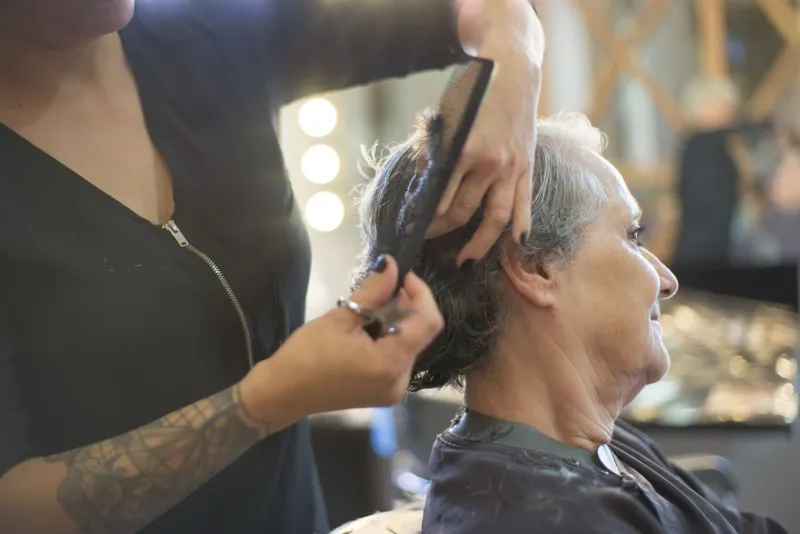
There is a particular sound in a nursing cottage on a Thursday morning: the low hum of a hairdryer, the scrape of a chair drawn closer to a mirror, and the murmur of a conversation resumed in instalments across many months. It is easy to overlook such an appointment when set against the clinical business of a care setting. Yet for many residents, visits from a hairdresser, a podiatrist or an optician are among the more consequential entries in the diary — not principally for what they do to the body, but for what they confirm about the person who lives in it.
A rhythm that belongs to the resident
Formal care tends to arrange itself around the requirements of staff: medication rounds, mealtimes, the movement of hoists and the arrival of district nurses. Personal appointments work differently. They are chosen, often years before residential care was contemplated, and they retain the shape of a life lived elsewhere. A weekly set, a monthly pedicure, a check on varifocals: these are continuities that a move into nursing care can either interrupt or preserve. Preserving them is not ornamental. It signals to a resident that their preferences are not subordinate to the institution's timetable.
The distinction matters most where dementia is part of the picture. A person who cannot reliably name the day of the week may nonetheless recognise the sensation of a familiar routine — the weight of a cape across the shoulders, the warmth of a dryer, the voice of someone who has attended them for years. Knowing that a chiropodist will come to address a painful corn, or that a hairdresser will set their hair before a family visit, offers a form of reassurance that is difficult to replicate by other means. Familiarity, in this setting, is a clinical asset as much as a comfort.
The appointments that matter
Hairdressing is the most visible of these services and frequently the most social. It involves touch, attention and an unhurried conversation in which the resident, rather than the care task, sets the agenda. For people living with limited mobility or dementia, a salon visit may be one of the few occasions when they are seated upright before a mirror and invited to consider how they wish to appear. That invitation is itself significant.
Podiatry and chiropody are less discussed but often more urgent. Foot pain restricts mobility, disturbs sleep and increases the risk of falls; for residents with diabetes or compromised circulation, neglect carries real clinical consequences. Some foot care is available through the NHS where defined eligibility criteria are met, though provision varies by area and is not universal. Where NHS care is not available, private appointments are commonly arranged.
Optometry and audiology deserve similar attention. An uncorrected change in vision or a hearing aid left unmaintained can accelerate confusion, reduce engagement and be mistaken for cognitive decline. Mobile opticians and hearing aid technicians who visit care settings remove a practical barrier that families frequently underestimate. Dental checks and denture maintenance belong on the same list, for reasons of nutrition and comfort as much as appearance.
Consent, capacity and the small print
Decisions about appearance are personal, and the Mental Capacity Act 2005 requires that they be treated as such. A resident with capacity is entitled to decline a haircut, request an unfamiliar style or insist on a colour that staff consider impractical. Where capacity is in doubt, decisions should be made in the person's best interests, informed by their known wishes, and recorded accordingly. A cottage that imposes a uniform short cut for ease of washing has made a judgement about convenience, not about dignity.
Consent is rarely a single event. It is better understood as a conversation, revisited as circumstances change and documented in the care plan. Anxiety about unfamiliar touch, for instance, may call for a gradual introduction, a familiar member of staff present, or a shorter appointment broken into stages.
Questions families can usefully ask
- Who initiates appointments, and are they booked without prompting from relatives?
- Is there a regular visiting practitioner, and how long have they attended the home?
- How is consent recorded, particularly for residents living with dementia?
- What happens if a resident becomes distressed or declines on the day?
- What are the costs, how are they invoiced, and are they explained in advance?
- May a resident continue with their own hairdresser or podiatrist if they wish?
- How are appointments adapted for limited mobility, hoisting or bed-based care?
- Are outcomes — skin integrity, vision, hearing — recorded and shared with the wider care team?
Paying for the ordinary
Families are sometimes surprised to learn that hairdressing, chiropody and similar services are generally private arrangements, invoiced separately from the weekly fee. This is normal, but it should be transparent. Attendance Allowance may help offset such costs for some residents, and a well-run cottage will explain the position plainly rather than leaving relatives to discover it piecemeal. Clarity about money is, in its own way, a marker of respect.
Continuity as a measure of care
Small settings and large ones approach these services differently, and neither model is inherently superior. What matters is whether the appointment is embedded in the resident's life or offered as an optional extra. A useful test is observational: does the staff team know the practitioner's name? Is there a quiet space with a mirror and adequate light? Does the resident return from the appointment looking like themselves?
Dignity rarely arrives in grand gestures. More often it arrives on a Thursday, with a comb, a cape and someone who remembers how the resident likes it done.