A Polite and Powerful Word: How Cottage Nursing Responds When a Resident Says No
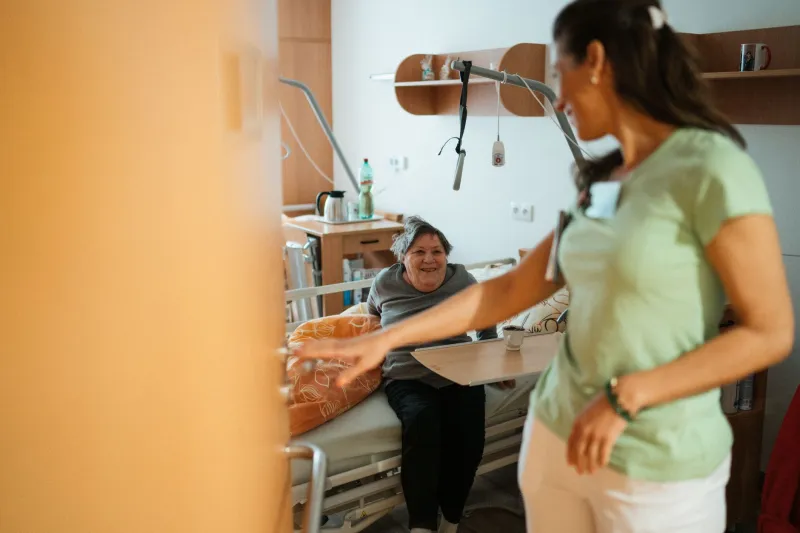
When a resident declines a bath, pushes away a plate or turns down an activity, the response of the people around them matters. In a nursing home, refusal can be read as non-compliance, a risk to be managed or a sign that something is wrong. In a cottage-style setting, where staff know the person and the rhythms of the day, it is better understood as communication. The task is not to win the argument. It is to listen, assess, explain and record, while keeping the resident at the centre of the decision.
Why 'No' Is Not a Failure of Care
Care work is built around offering help, so a refusal can feel personal. Yet an adult with capacity is entitled to decline care, even when others believe the choice is unwise. Treating every refusal as a obstacle risks turning compassionate nursing into persuasion. Treating every refusal as a final answer risks missing pain, fear, infection, low mood or a change in condition. Good practice holds both truths together: the resident's voice comes first, and the reason for the refusal still deserves clinical attention.
In a cottage-style nursing home, the smaller scale can make this easier. Staff see how a resident usually behaves, what they prefer at breakfast, which wash routine feels acceptable and when a quiet day is normal. That continuity helps distinguish a one-off reluctance from a meaningful change. It also creates a duty to avoid over-familiarity. Knowing someone well should improve listening, not give staff licence to override a decision because they believe they know best.
The Legal Starting Point: Capacity and Consent
Across the UK, the starting presumption is that an adult has capacity to make their own decisions. In England and Wales, the Mental Capacity Act 2005 sets out the framework. Scotland has the Adults with Incapacity (Scotland) Act 2000, and Northern Ireland has the Mental Capacity Act (Northern Ireland) 2016. The detail differs, but the principle is consistent: capacity is decision-specific and time-specific.
A resident may have capacity to decide what to eat but lack capacity to make a complex decision about medication. A person may be able to refuse an activity in the morning and struggle to weigh the consequences of refusing essential care later in the day. Capacity is not a global label. It is assessed for the particular decision at the particular moment.
An unwise decision does not, by itself, prove a lack of capacity. This is one of the most important points for relatives to understand. A resident who declines a recommended treatment, a favourite meal or a social event may be making a capacitous choice. Where capacity is genuinely in doubt, the assessment should be recorded. If the person lacks capacity for that decision, a best-interests decision follows, involving those close to the person and taking the least restrictive option available.
Advance decisions to refuse treatment, lasting powers of attorney and welfare attorneys may also be relevant. Families should feel able to ask whether these documents exist and whether they have been considered. The nursing team should be able to explain the legal basis for a decision without hiding behind jargon.
Risk Is Not the Same as Danger
Cottage nursing cannot remove all risk, and it should not try to. A resident may choose to accept a level of risk in order to keep a sense of self. Refusing a morning wash, declining a prescribed diet or choosing not to join an activity may carry consequences, but those consequences must be weighed against dignity and autonomy.
This is sometimes called risk enablement: supporting people to make informed choices rather than imposing safety as an absolute. It does not mean abandoning care. It means explaining what is known, offering alternatives, reviewing the situation and recording the conversation. If a resident refuses food, the team should consider pain, dental problems, swallowing difficulties, low mood, cultural preferences and the timing of meals. If medication is refused, the nurse should record the refusal, inform the prescriber where appropriate and explore the reason. Concealing medication in food or drink without a lawful basis is not acceptable practice.
Safeguarding has a place where there is abuse, neglect or undue pressure. It should not be used simply because an adult has made a decision others dislike. The distinction matters. One response respects autonomy; the other risks using protection as a cover for control.
Food, Medication, Washing and Activities
Refusals are rarely identical. A declined plate may signal nausea, grief, a changed sense of taste or a wish to eat later. A refused wash may relate to pain, embarrassment, gender preference or a previous trauma. A declined activity may be a preference rather than a symptom. A refused tablet may reflect fear of side effects, difficulty swallowing or a belief about medication that needs to be heard.
In each case, the first response should be curiosity rather than pressure. What is being refused? What does the resident understand? What would make the offer more acceptable? Is this a change from the usual pattern? Staff should offer choice within safe limits, allow time and return later where possible. Persistent refusal should trigger a review, not a louder repetition of the same request.
Involving Relatives Without Taking Over
Families often hold important knowledge. They may know what a parent would have said before illness, what frightened them in hospital or which routines helped them feel themselves. That knowledge is valuable. It does not, however, replace the resident's own decision-making authority where capacity is present.
Where views conflict, a best-interests meeting can help. The question should be what the resident would want, not what is easiest for the family or the service. Relatives can ask for the reasoning behind a decision, request a review and seek a second opinion where appropriate. They should also be prepared to hear that an unwise decision is still a capacitous one. Phrases such as she does not mean it should be tested against a proper assessment, not assumed.
The Discipline of Recording
Good records do more than protect the service. They protect dignity. A useful record notes what was offered, what the resident said, how capacity was considered, who was consulted, what alternatives were tried and when the decision will be reviewed. It shows whether staff listened and whether the refusal was treated as a one-off or a pattern.
Documentation also provides continuity across shifts. In a cottage setting, where the same small team may see the resident throughout the week, clear notes help staff respond consistently. They make it harder for a resident to be pressured by one person after another, and easier for relatives to understand what has happened.
What Relatives Can Do
Ask whether a capacity assessment has been completed for the specific decision, not just for care in general.
Ask what the resident understands and what alternatives have been offered.
Avoid turning every visit into a campaign of persuasion. Pressure can damage trust and may amount to undue influence.
Request a review if refusal persists or if you notice a change in mood, appetite, mobility or alertness.
Recognise that capacity can fluctuate, particularly where infection, pain or fatigue is present.
Raise a safeguarding concern if you believe there is neglect, coercion or unsafe practice.
Accept that a capacitous adult may make a decision you find difficult. Your role is to support their voice, not to replace it.
The Cottage Difference
Small-scale nursing can support this work well because staff see patterns. They notice when a resident who usually enjoys breakfast leaves it untouched, or when a normally sociable person wants to stay in their room. That continuity is a clinical asset. It helps the team respond to the person rather than the task.
At Arundel Nurse's Cottage, the cottage model is not a claim that refusal will never be difficult. It is a reminder that care is relational. A polite and powerful word deserves a polite and careful response: one that assesses capacity, manages risk, involves family where helpful and records the decision with respect. When a resident says no, the proper question is not how to make them comply. It is what their no is telling us, and how we can respond with dignity.